Let's talk about email
I remember my first email account. jen101@tower.york.ac.uk. That was 1994, when they put the name of the server in the domain. Good times.
Today: not so many good times. Email has become a burden for most of us, and that's on a good day. On a bad day it's the reason you got your identity stolen. But it's not like you can just not have an address.
So let's talk about email – again. My last post on the topic was published less than 18 months ago, but already feels horribly outdated. And now we have this new video thing going on – so this is the first episode of a video series/mini-course on email.
We'll look at it all, from managing your online identity, to not being that business that stencils a @gmail.com address on the side of your van, to managing a corporate inbox over which you have no control. I imagine this will continue for a few months.
We're making this video public, but the rest will require a Pro membership. I spend all week thinking about this and creating these courses. That's just not possible without memberships. So, thanks.
Email's two roles
Email has two primary roles in our lives.
- As a deliverer of information, and work. As in: here's this thing you have to do now.
- As your de facto digital identity.
The first of those is the cause of our deep-rooted aversion to email. Few other technologies allow anyone, at any time, to give you more stuff to do! It's weird that we ever allowed it to happen. We'll come back to this later in the series.
But in late 2026 I'm sure its role as the centre of your digital identity is more important and certainly more risky. If you're going to get your money or identity stolen, it's going to happen by someone compromising your email. Current behaviour practically encourages it.
R.I.P. having 'an email address'
In last year's post, I said that I wasn't a fan of 'one-time' addresses. I was wrong: it turns out I just hadn't found the right solution.
Here's the problem with email. Previous-me was innocentfool26@gmail.com and I gave that address to anyone who asked for it. I used it for the most important of services (my bank, the tax office) and for the most mundane (that forum where I look at pictures of old Volvos).
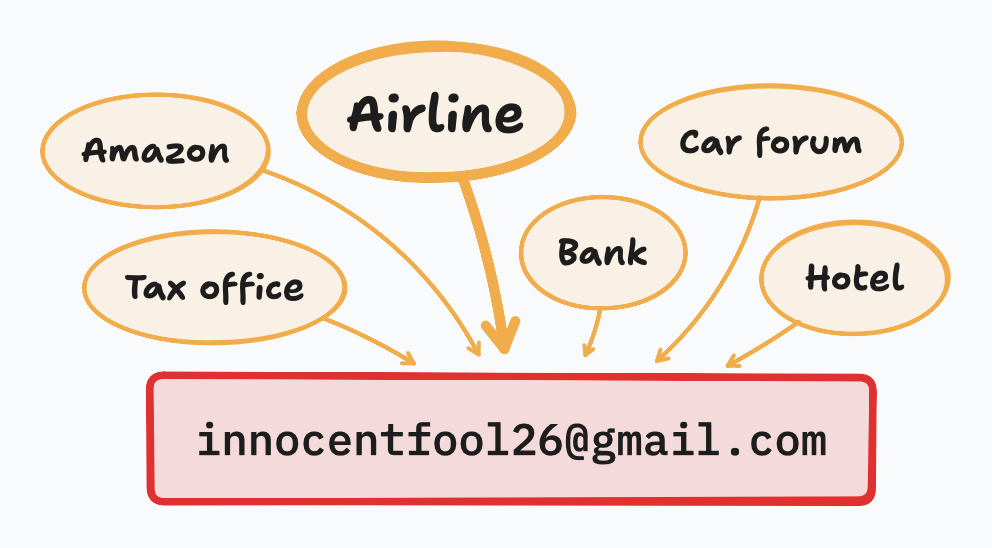
So now all these organisations have my email address. And one of them – let's pick on Vietnam Airlines, because it happened – leaks it.1 Now some hacker buys your address on the dark web, and tries to scam you.
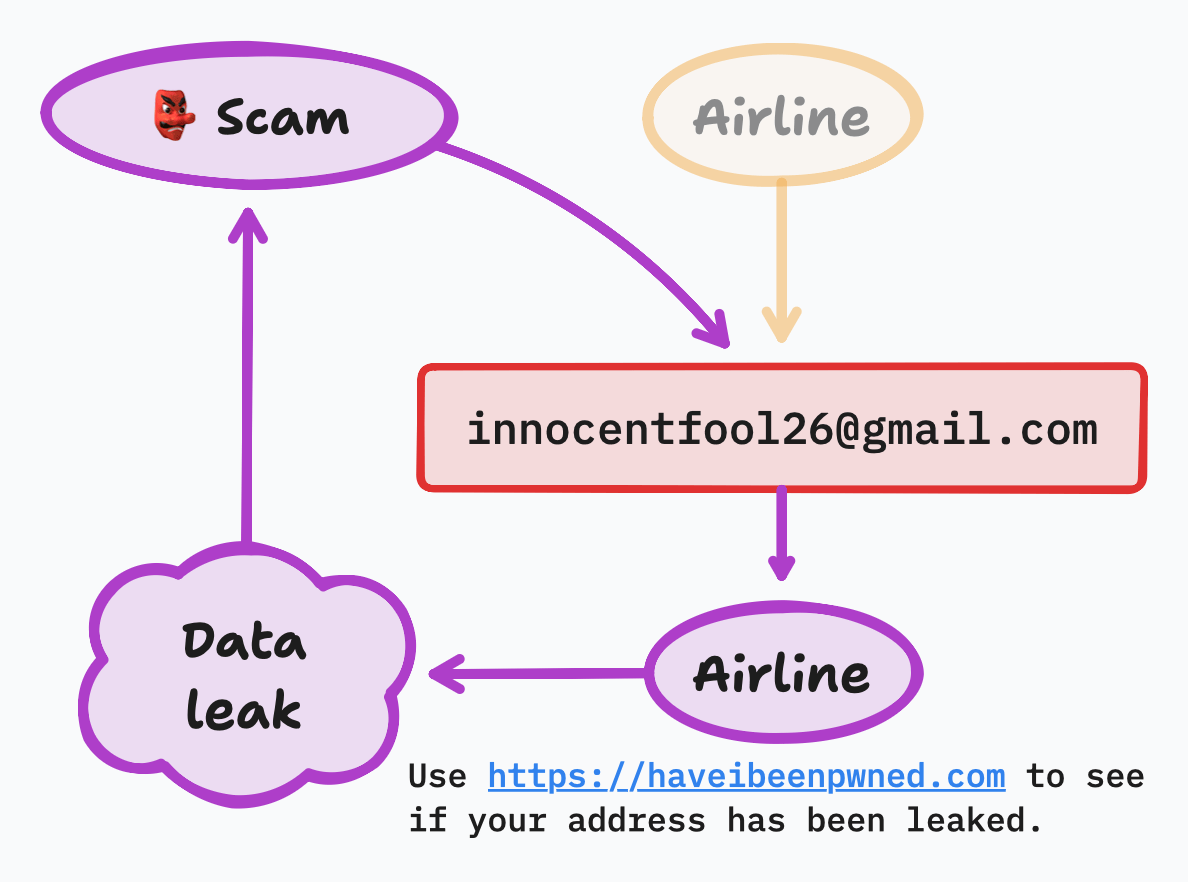
It's important to realise that this has nothing to do with you. There is no action you can take that will prevent some service from leaking your email address.2 So we need a different solution: one that assumes your address will be leaked, and plans for it.
Everyone gets their own
The solution is to give everyone a different address. I'll be recommending you use Fastmail because they make this really, really easy. Fortunately, I love everything else about them as well.
Fastmail costs money. There are free options that don't have as many features. I'll be sure to cover them when the time comes.
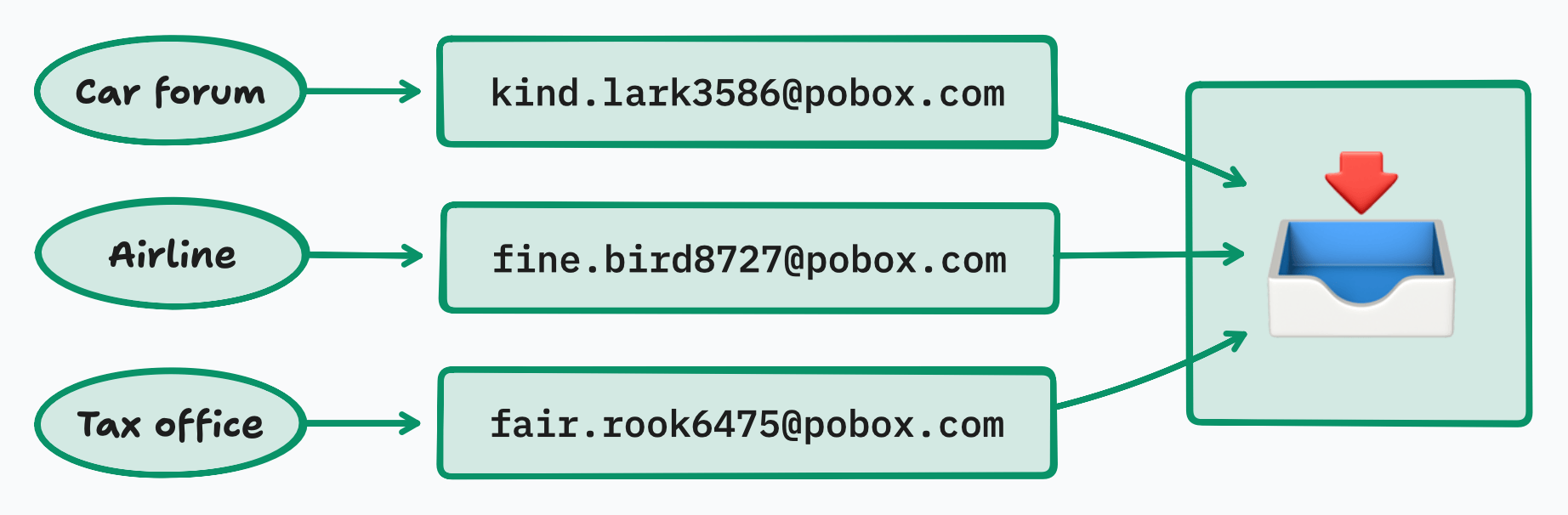
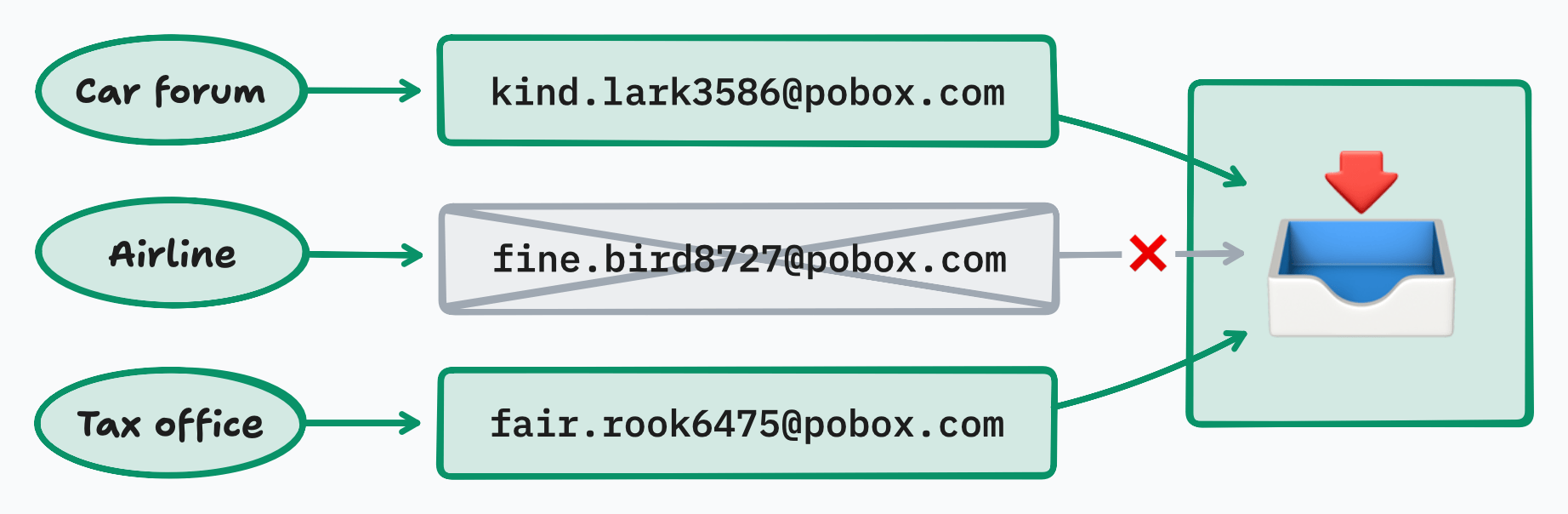
Fastmail creates these addresses for you, and delivers them all to one inbox – so while this looks complex, in practice it's simple.
Now here's where this gets interesting. We can't stop that airline leaking your address again. But now we don't care.
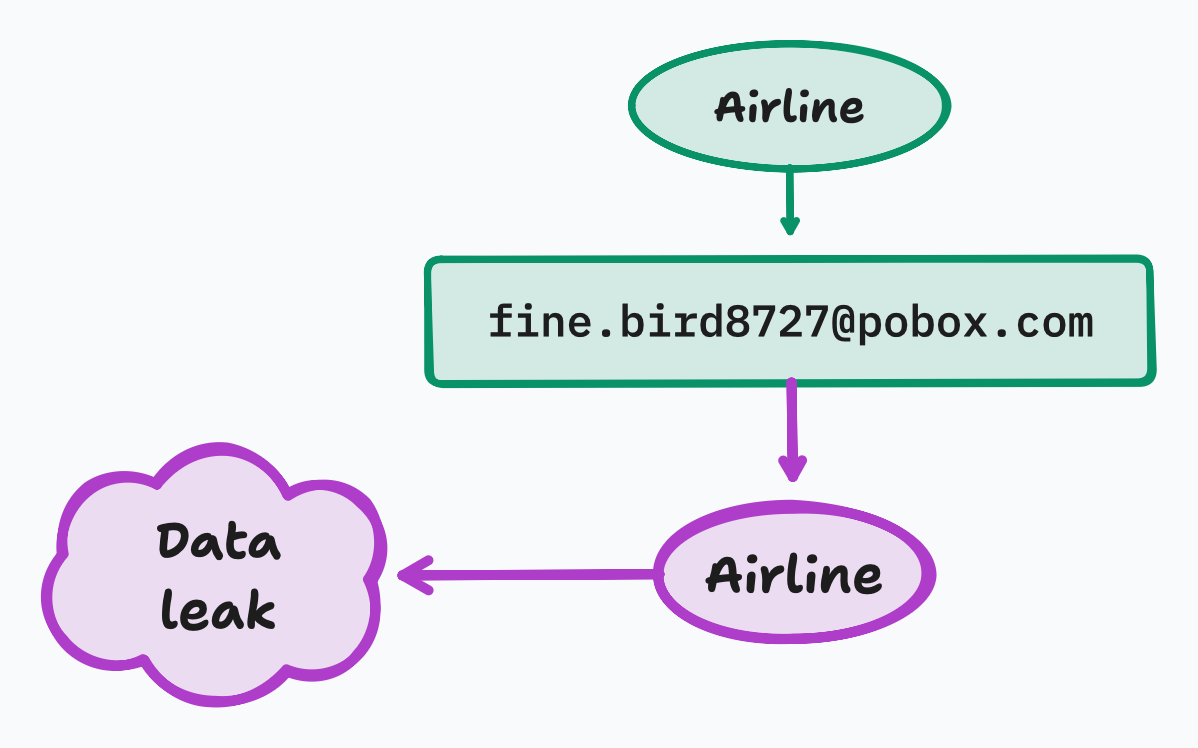
Because all we do is turn that address off! Nothing else changes. Nobody else needs to be notified. And now some scammer can buy this address – what do I care? It was disposable. Its leak has no impact on me.
The most comfortable I've ever felt
I've been doing this for about a year now and I can't overstate how much more secure I feel. No kidding I think this is the best thing I've done technology-wise in the last decade. It's weirdly addictive: this knowledge that I am totally in control. I truly love it.
Many other benefits
There are so many more benefits. No more spam is one. But we'll get to those as the series progresses.
This time, we've looked at what happens before the @. Next time, we'll look at the part after, and show you why there's no need to use @gmail.com anywhere in your business. Level up with your own domain!
Footnotes
-
I myself leaked 3,638 addresses earlier this year. So I pass no judgement. ↩
-
You can check if it's already happened at haveibeenpwned.com. Run by Australian security researcher Troy Hunt, this site is the internet's trusted repository of data leak information. ↩